
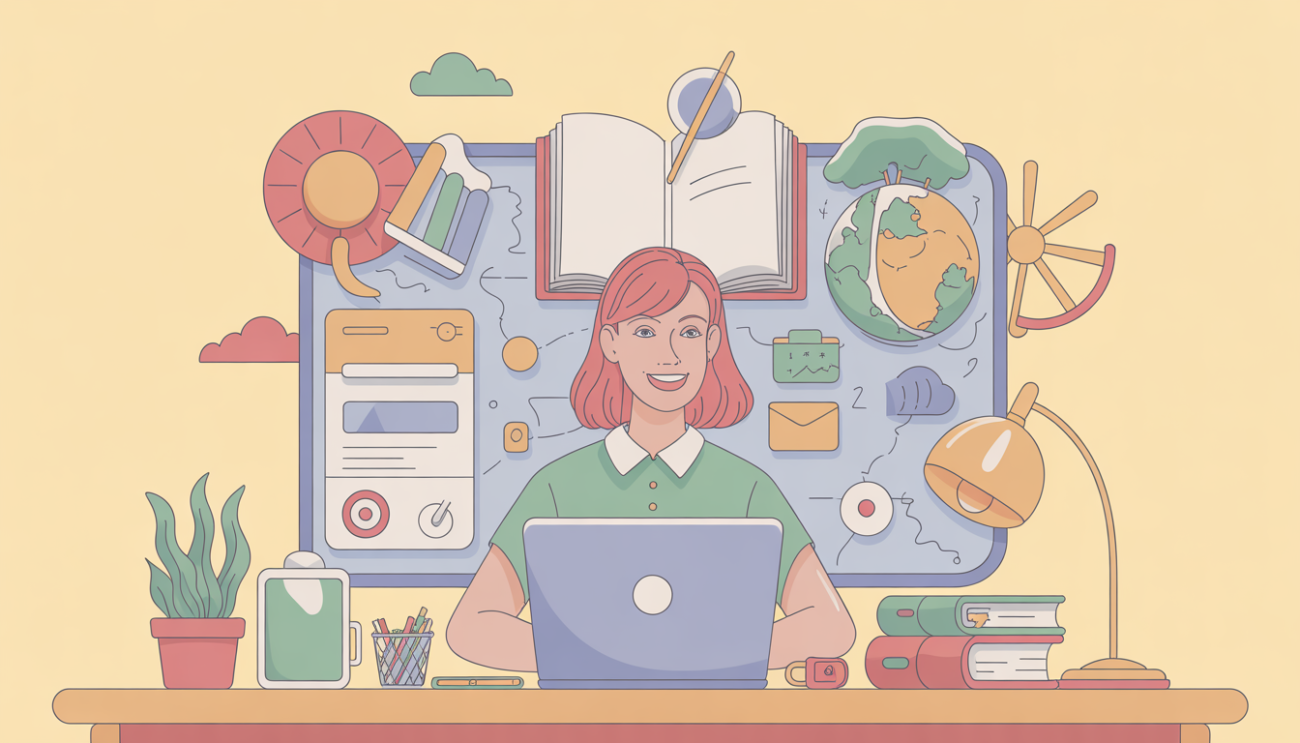
Not too long ago, learning something new meant sitting in a classroom, listening to a teacher, and trying not to fall asleep after lunch. Today? You can learn almost anything from your bed, wearing pajamas, with a plate of snacks next to you. That’s online learning.
Online learning has become extremely popular because it removes almost every barrier that used to stop people from learning. No travel. No strict schedule. No uncomfortable classroom chairs that feel like they were designed by someone who dislikes humans.
People now learn everything online—coding, cooking, marketing, design, languages, and even how to fix a leaking tap (yes, YouTube has saved many kitchens).
But here’s the truth: while online learning is easy to access, it is not always easy to succeed in. Many beginners start with excitement and then disappear after three days. If you’ve ever signed up for a course and never opened it again… welcome to the club. There are thousands of us.
This guide is here to help you avoid that fate and actually finish what you start.
2. What Online Learning Really Means (Simple Explanation)
Online learning simply means learning using the internet instead of going to a physical classroom.
That’s it. No complicated definition needed.
You can learn through:
- Video lessons
- Online courses
- Live classes on Zoom or Google Meet
- Educational apps
- Even YouTube tutorials (the unofficial university of the world)
Think of it like this: instead of a teacher standing in front of you, the teacher is inside your laptop or phone. And unlike real teachers, you can pause them when you don’t understand something—or when you need to answer a phone call.
Online learning is flexible, but that flexibility is also where many beginners struggle. We’ll talk about that later.
3. Benefits of Online Learning for Beginners
Let’s be honest—people don’t choose online learning just because it’s trendy. It actually has real advantages.
1. You can learn anytime
Morning, night, or 3 AM when you suddenly decide to “change your life.”
2. You learn at your own speed
If you didn’t understand something, you can replay it. Try doing that in a live classroom without judgment.
3. It’s usually cheaper
Many courses are free or cost way less than traditional education.
4. Wide variety of topics
From business to baking cakes shaped like dinosaurs—yes, that exists.
5. Learn from anywhere
Bed, couch, café, or even while pretending to work at your job (not recommended, but possible).
But the biggest benefit is this: you are in control of your learning.
And control is powerful… but also dangerous if you don’t use it properly.
4. Challenges You Might Face (And Why That’s Normal)
Let’s not pretend online learning is perfect. It has its own problems.
1. Losing motivation quickly
One day you feel like a genius. Next day, you forget the course exists.
2. Too many choices
There are thousands of courses. Choosing one feels like picking food in a buffet when everything looks good.
3. No one is forcing you
In school, teachers push you. Online learning? Nobody cares if you finish… except your future self.
4. Distractions everywhere
Social media is just one tab away. That tab is very powerful.
5. Lack of structure
If you don’t plan your learning, you’ll just “randomly watch videos” forever.
These challenges are normal. Every beginner faces them. The difference is whether you push through or quit early.
5. What You Need Before You Start Online Learning
Good news: you don’t need much to start.
But you do need a few basic things:
1. A device
Laptop, tablet, or smartphone. A potato is not recommended.
2. Internet connection
Stable enough to stream videos without turning into a buffering nightmare.
3. A clear goal
This is important. Ask yourself:
- Why am I learning this?
- Do I want a job skill, hobby, or personal growth?
4. Basic discipline
Not strict military discipline. Just enough to sit down and actually learn.
5. A quiet space (if possible)
Even 30 minutes of focus beats 3 hours of distracted learning.
Once you have these, you are ready to begin your journey.
6. Best Platforms for Beginners
There are many platforms out there, but beginners should focus on simple, trusted ones:
1. Coursera
Great for structured learning from universities and companies.
2. Udemy
Huge collection of courses on almost everything.
3. Khan Academy
Perfect for beginners, especially for basics and academic subjects.
4. YouTube
Free, unlimited content. Just be careful—quality varies a lot.
5. Skillshare
Good for creative skills like design, photography, and editing.
Each platform has its own style. The best one is the one you actually use consistently.
7. How to Choose the Right Course Without Getting Confused
This is where many beginners fail. They spend more time choosing than learning.
Here’s a simple rule:
Pick ONE course that:
- Matches your goal
- Has good reviews
- Is beginner-friendly
- Is not too long or complicated
Don’t overthink it.
